
The Turning Point in Architectural Design
0
Арт. 9783777436760
5 005 ₽
"Под заказ" - с вами свяжется оператор для уточнения даты доставки.
"Распродажа" – цена указана с максимальной скидкой.
"Товар с уценкой" – потеря товарного вида. Книга не в идеальном состоянии.
"Распродажа" – цена указана с максимальной скидкой.
"Товар с уценкой" – потеря товарного вида. Книга не в идеальном состоянии.
Характеристики
Страницы
:
240
Страна происхождения
:
Соединенное Королевство Великобритании и Северной Ирландии
Размеры (мм)
:
270x240x18
Вес(г)
:
1220

Цена действительна только для интернет-магазина и может отличаться от цен в розничных магазинах
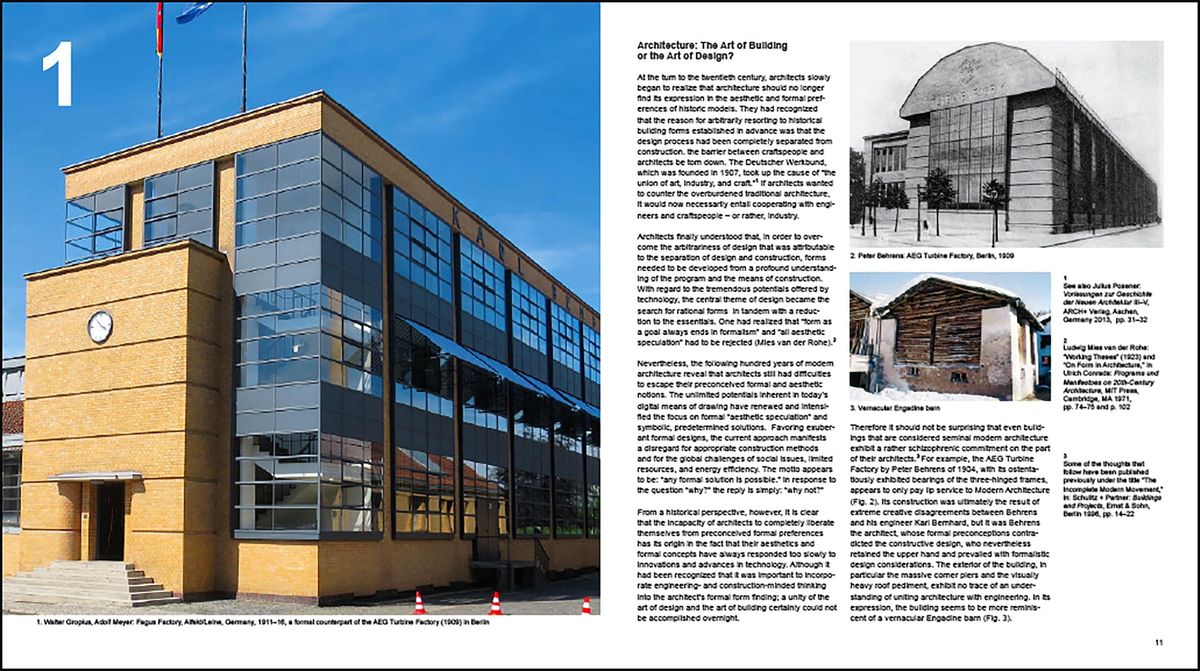
At the turn to the twentieth century, architects began to realize that architecture should no longer find ist expression in historic styles. They had recognized that the reason for arbitrarily resorting to historical building forms established in advance was that the design process had been completely separated from construction.
In spite of the incidental paths of architectural design approaches, there seems to be a consensus emerging in view of today's global challenges: It is no longer just a question of what shall I build or how shall I build. Instead, the question is how shall I organize and improve my design tools to new dimensions of architecture in order to increase building performance while saving resources and energy and to let digital design solve design tasks that could hardly be solved previously? Today, many projects are pointing in this direction and seem to inaugurate a sustainable fourth dimension of architecture. This book is a comparative critical analysis of such seemingly incidental design approaches, and thus it is an attempt to serve as a historical scenario for the future.
In spite of the incidental paths of architectural design approaches, there seems to be a consensus emerging in view of today's global challenges: It is no longer just a question of what shall I build or how shall I build. Instead, the question is how shall I organize and improve my design tools to new dimensions of architecture in order to increase building performance while saving resources and energy and to let digital design solve design tasks that could hardly be solved previously? Today, many projects are pointing in this direction and seem to inaugurate a sustainable fourth dimension of architecture. This book is a comparative critical analysis of such seemingly incidental design approaches, and thus it is an attempt to serve as a historical scenario for the future.
Загрузка отзывов...
Атрибуты Релод
Язык
Формат
Страницы
240
Год издания
Страна происхождения
Соединенное Королевство Великобритании и Северной Ирландии